

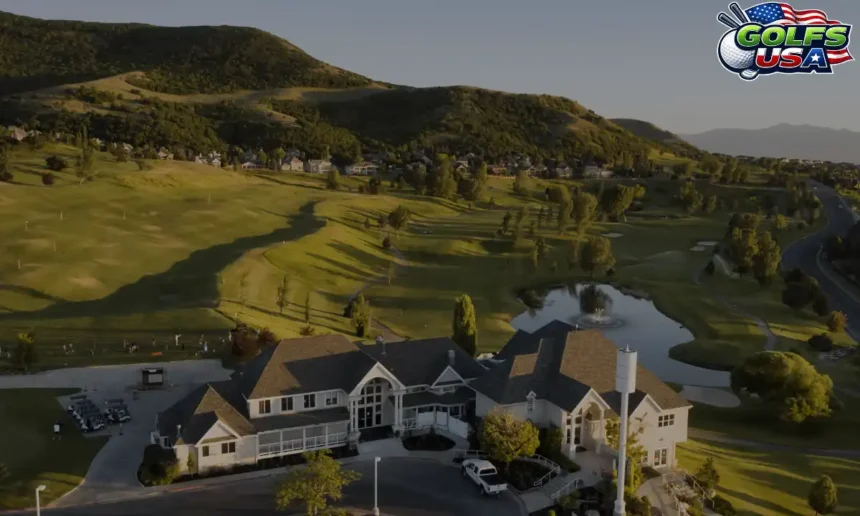
It’s a smell that gets you when you turn into the Desert Pines Golf Club parking lot and it shouldn’t. It’s pine sap, clean and pungent, that slices through the desert air with a sort of sensory ambush you have to blink to process. You are standing in a city of neon and asphalt, 15 minutes from the Strip, but you are breathing Carolina sandhills. It was not by accident.Perry Dye and Cynthia Dye McGarey designed it in 1996 with one paramount goal: to import the experience of playing a sandhills round (Pinehurst, etc.) to the Mojave. To that end, they planted over 4,000 mature pine trees on the 6,222-yard par-71 layout, bordered them with white sand bunkers, bentgrass greens (modeled on Augusta National), and four lakes that come into play on nine holes.
Desert Pines Golf Course is located at 3415 East Bonanza Road, Las Vegas, Nevada 89101. It can be reached at 702 388 4400. The facility has been operated by Arcis Golf, who purchased it from Walters Golf in 2014 and has been busy improving it ever since. Rates range from approximately $90-$179 and dynamic pricing offers discounts to those booking early and off-peak times.Golf Digestnamed Desert Pines one of America’s best new upscale public courses. It’s the most uniquely atmospheric course near the Strip and among a select few, it’s the only Las Vegas course they ever want to play.
This guide walks through every facet of Desert Pines. The architecture, holes, fees, facilities, membership, and who this course will suit-and for whom.
Desert Pines Golf Course: The Essential Details
| DETAIL | INFORMATION |
|---|---|
| Full name | Desert Pines Golf Club |
| Address | 3415 East Bonanza Road, Las Vegas, Nevada 89101 |
| Phone | (702) 388-4400 |
| Website | desertpinesgolfclub.com |
| Managed by | Arcis Golf (purchased from Walters Golf, 2014) |
| Holes | 18 |
| Par | 71 |
| Yardage (back tees) | 6,222 yards (some sources list 6,810 yards from championship tees) |
| Course rating | 71.1 |
| Slope rating | 137 |
| Greens | Bentgrass. Large, undulating. Modeled after Augusta National greens in design philosophy. |
| Fairways | Bermuda 419 and Tiffway II overseeded with ryegrass for winter. |
| Designer | Perry Dye, ASGCA, and Cynthia Dye McGarey (1996). Dye Design International. |
| Opened | 1996 |
| Distance from Strip | Approximately 10 to 15 minutes. Less than 15 miles. |
| Distance from airport | Approximately 7 miles, 20 minutes from Harry Reid International. |
| Green fees (estimated) | $90 to $179 depending on season and time of day. Dynamic pricing model. |
| Hours | 6:00 AM to 5:00 PM, Monday through Sunday. |
| Dress code | Proper golf attire required. Soft spikes only. Metal spikes not allowed. |
| Signature design feature | More than 4,000 mature pine trees, white sand bunkers, Pete Dye-style railroad ties, four lakes. |
The Designer: Perry Dye, Not Pete Dye
It is no wonder that almost every mention of this course has given the credit for its design to Pete Dye, golf course architect extraordinaire and designer of TPC Sawgrass, Whistling Straits, and the Ocean Course at Kiawah Island. The fact is that the course was designed by Perry Dye and Cynthia Dye McGarey of Dye Design International. Perry is the son of Pete Dye and Cynthia is the daughter in law to Pete Dye, and the family and design are linked close enough in most golf people’s minds to continue perpetuating the common mis attribution.
During Perry Dye’s career as a designer and redesigner he has constructed and re constructed over 100 golf courses. He is a full member of the American Society of Golf Course Architects. While working in a more open way than his father Perry operated with his father’s same design philosophy where you have risk-reward decisions that you have to make on nearly every shot, using the landscape around the course both natural or transplanted to form a design that seems unique to its environment. This was difficult on a course such as Desert Pines where the designer had to somehow make a sand hills feel experience on what used to be the middle of a very flat, desert. The answer was the thousand of trees planted as well as the system of white sand bunkers that comprise so much of the course.
The signature style of the Dye family designs can easily be spotted at Desert Pines. It has the standard for Dye course construction which is rail road ties along the greenside and fairway bunkers, a style Pete Dye introduced at Harbour Town golf club in 1969 and can be linked to Dye designs for the years since. It is built with very severe undulations on the greens and you can easily notice that missing the proper section of the green is detrimental to a recovery shot. It also has very tight landing areas on fairways where precision and not distance should dictate play. The course is not very long for modern golf at only 6,222 yards from the back tees but the Dye design has always relied more on smart shots that precise distance and the Dye designers here knew exactly how to accomplish just that.
The Course: Why 4,000 Pine Trees Change Everything
This one fact about this course, to which every other fact relates, is the trees. Las Vegas golf is overwhelmingly desert golf. The Las Vegas Paiute Golf Resort, Painted Desert, Spanish Trail-all provide the broad sweep of the desert in front of a dramatically jagged mountain background with the visual excitement that only rocks and native brush beneath a brutal blue sky provide. All of which is perfectly acceptable golf, genuinely beautiful, even. But it is also what anyone expecting to golf in Vegas expects to find.
Desert Pines gives you what you are not expecting. You tee up your drive, and you are completely surrounded by tall pine trees defining both sides of the fairway. There is no dramatic, rugged mountain background. There is no sweeping open desert vista. There are pines, white sand, the scent of resin, and if you close your eyes and forget what kind of car you rented to get there, you can very well be on the first tee in Pinehurst, North Carolina, about to tackle Number Two.
But the impact of the trees is not merely visual. The pines offer measurable protection from the heat, which is critical in 105-plus July and August Vegas weather. When it becomes painfully difficult to play most Vegas courses at any time of day other than 5:00 A.M. In high summer, the desert golf environment at Desert Pines actually stays cooler than the ambient air and has the benefit of shade across the fairways that the desert courses do not. For golfers considering Vegas in the hottest months, the shade at Desert Pines is no small selling point. It is an important amenity.
The Holes: What to Expect on Each Nine
Front Nine: Into the Pines
The front nine of Desert Pines opens into the middle of the pine tree corridor and sets up the fundamental challenge of the course immediately. The fairways are fairly wide, but the tree lines are very real, and a missed short-grass approach shot will land in the pine needles with an obstructed line back to the green. This is not the typical desert game, where a missed tee shot might wind up in sandy waste that you can punch out with a low iron. Mistakes at Desert Pines carry real consequences.
Water is a factor on 9 of the 18 holes, and many of the front nine have lakes or ponds placed at the spot where the shot is under maximum psychological strain. Shots approach these greens with a required line and a necessity of seeing that line clearly. These front-nine bentgrass greens slope from you as you approach, making missing long typically worse than missing short. The white sand bunkers are unusual for Vegas and brighter than usual bunker sand, and they are placed in classic Dye fashion, requiring that the player think about exactly where they want and do not want their ball.
The par-3’s on the front nine represent real tests at reasonable yardages that actually play harder than their numbers indicate. The combination of tree encroachment, the location of water, and the contouring of the green surfaces combine to force that mid-iron into the green at a par-3 here to be more precise than the same number from a flatter, more open layout.
Hole 9: Double Down
They call number 9 at Desert Pines Double Down. It plays 447 yards, it is a par 4, and there is water up the right side of the hole from the tee to the green. This name refers both to the commitment required on the tee and the Las Vegas locale. It requires a tee shot that is straight and doesn’t bite the water on the right and sets up an approach to a green that is not friendly to the left either. It’s a hole that either separates the guys who have played conservatively all day and lost the course and the guys who are committed on the tees and shaped to have a chance at par. It is the type of hole where you should know what the hole demands of you before you ever step up on the tee.
Back Nine: The Second Look
The back nine at Desert Pines features a subtle shift from the front nine. The par-37 back nine is longer and has a bit more elevation changes than the comparatively flatter front nine layout. The tree lined corridors are still prevalent but, the holes utilize them differently and, in some cases, the back nine fairways utilize wider approaches to the tee shot landing area that narrow as you approach the green.
The water elements are still incorporated throughout the back nine and, as with any course, the concluding holes to the routing finish strong and reward a full-bag commitment. The closing three holes at Desert Pines are not a walk in the park, as there are no drive and chip bird opportunity available on the 16 th through 18 th holes for those whose golf shot finds only its sister in direction and distance. The Dye philosophy reigns supreme through eighteen: earn it or lose it. There is no such thing as a “hope chip” on number eighteen, just an executed one.
The bunkers surrounding the greens on the back nine are, if anything, even more daunting than those on the front. The fifth green practice facility, viewable from the back nine, is a replica of the 17 th hole at many different iconic courses and presents an interesting self-referential dimension to the course layout, a notion of which the keen golfer will find noteworthy.
| HOLE | PAR | CHARACTER AND TIPS |
|---|---|---|
| 1 | 4 | Tree-lined opener. Commit to the fairway and resist the instinct to aim away from water left. |
| 2 | 4 | Approach requires precise distance control. The green slopes significantly. |
| 3 | 3 | Bentgrass green demands carry to the correct tier. One club more than flat-course instinct suggests. |
| 4 | 5 | Birdie opportunity for controlled long hitters. The lake right of the green punishes greed. |
| 5 | 4 | Railroad ties on the left bunker face are classic Dye. Stay center and work your approach from there. |
| 6 | 3 | White sand bunkers frame this green on three sides. Take dead aim and trust the number. |
| 7 | 4 | Narrow fairway demands a straight tee shot. A three-wood off the tee is often smarter than driver. |
| 8 | 4 | Water left changes approach angle decision. Miss right and you have a better angle. |
| 9 | 4 | Double Down. 447 yards, water all the way right. Commit to your line off the tee. Do not steer it. |
| 10 | 5 | Back nine opens with a reachable par-5. Two-shot players can go for it with the right wind. |
| 11 | 4 | The trees close in here. A straight ball is worth ten yards of extra distance. |
| 12 | 3 | Over water. One of the most photographed holes at the course. Trust your yardage. |
| 13 | 4 | Long and demanding. The two-tiered green punishes approach shots on the wrong level. |
| 14 | 4 | A risk-reward tee shot where the aggressive line cuts corner but threatens trouble. Your call. |
| 15 | 5 | The second par-5 on the back nine. Bunkers guard the approach zone left and right at 100 yards. |
| 16 | 3 | Short but dangerous. Front bunkers are deeper than they look from the tee. |
| 17 | 4 | One of the most strategic holes on the course. Club selection off the tee is everything here. |
| 18 | 4 | The closing hole brings you back to the clubhouse with a tee shot that frames the round. Finish clean. |
Green Fees: What You Pay and When to Book
Dynamic pricing. This is probably the most important, and most practical, thing you need to know before you make your reservation at Desert Pines. It means that the green fee you pay for a tee time is determined by how much that time is in demand. The more tee times booked in that specific time slot and on that specific day, the more expensive that tee time will become. Low demand tee times may even be priced at a steep discount relative to a peak time.
| TIME AND CATEGORY | APPROXIMATE RATE | NOTES |
|---|---|---|
| Weekday morning (peak season) | $120 to $179 | October through May. Book early for best rates before demand drives price up. |
| Weekday afternoon / twilight | $90 to $130 | Later tee times reduce cost. Twilight rounds offer best value in cooler months. |
| Weekend morning (peak season) | $150 to $179 | Saturday and Sunday mornings book quickly. Book the maximum advance window. |
| Summer rates (June to September) | $70 to $120 | Las Vegas summer heat reduces demand significantly. Best pricing of the year. |
| Cart fee | Typically included | Carts are generally included in the green fee at Desert Pines. Confirm when booking. |
| Replay rounds | Ask at the pro shop | Same-day replay rounds are sometimes offered at reduced rates when tee sheet allows. |
For visiting golfers on a budget, the concrete advice at Desert Pines is to plan as far ahead as the reservation window allows. Tee times and real-time pricing are displayed on both GolfNow and the course website. If you see a rate that appears to be in your acceptable range, book it rather than holding out for what might become a better deal because the dynamic pricing will inevitably move north as the tee sheet fills up. Booking in the summer months of June, July, and August will result in the best rates of the year, and the pine tree canopy makes the course more bearable in the heat than almost any other Las Vegas option.
The Practice Facility: The Best in Las Vegas
Desert Pines’ practice facility isn’t a separate item, rather it’s one of the most substantial practice environments that any daily-fee in Nevada can offer and, if you want a serious warm-up or post-round practice session, it completely alters the overall value proposition.
It sprawls across 20,000 square feet and consists of two tiers. This climate-controlled environment is not a frivolous amenity; in July in Las Vegas, with outdoor temperatures that will climb to 110, it enables a golfer to hit competitive practice shots without spending three-quarters of an hour prior to their tee time losing body mass to the heat. In fact, the double-deck structure enables two separate sets of golfers to work on various target distance shots without their balls interfering.
This practice facility includes five target greens designed to mirror well-known par-3 17 th holes from courses all over the world. This is a rather uncommon design feature for a range, but is indicative of the serious golf intent of the facility which clearly aims to replicate a country club experience and eschews the typical generic range atmosphere. Practicing iron shots to replicas of famous tournament holes does add an entirely different dimension to the focus than would a shot aimed at a painted yellow stake.
The range is also equipped with lighting so night practice is an option. Note that the driving range is closed from 11:30 am to 12:30 pm each day for a full pick and clean, thus no balls can be struck during that hour. If you plan on an early afternoon tee time you will need to adjust your arrival to take this into account or utilize the practice green.
The Arcis Players Membership: Regular Play Options
The Arcis Players Membership is ideal for Las Vegas locals who plan to play Desert Pines on more than a handful of occasions each year. This membership program grants you access to Desert Pines and three additional Arcis managed properties throughout the city at a monthly cost. The membership levels are structured with increasing numbers of complimentary rounds and perks as you move up the tiers.
The four Arcis owned and operated golf courses in the Las Vegas area are Desert Pines Golf Club, Angel Park Golf Club, Las Vegas Golf Club, and Painted Desert Golf Club. Purchasing a membership at one of these clubs is honored at all four, which provides members with significant variety in terms of courses instead of restricting members to one type. Angel Park has 36 holes located in the west end of the city that consists of a palm and mountain course. Painted Desert is a desert style course with large fairways and mountain views, the opposite of Desert Pines’ confined pine forest environment. Las Vegas Golf Club, owned and operated by the city of Las Vegas is available as a low cost daily play option.
Memberships have their limitations, specifically with a certain number of free rounds restricted to non-peak times, a Nevada residency requirement in order to receive membership rates and benefits do not apply to league play, group play, or other discount categories. Membership is nontransferable and tee times are available by request and subject to availability. In order to receive the most current pricing and information regarding the various levels available to a Las Vegas local, the pro shop may be contacted at (702) 388-4400.
Duffers Bar and Grill: The Clubhouse Experience
The Arcis Player Membership would best be suited for locals that play a course located in Las Vegas more than a handful of times during the year. With this membership you can have access to this Desert Pines facility along with three other Arcis controlled facilities in the city of Las Vegas for a monthly fee. The plans have different tiers where more perks and free rounds can be had by upgrading.
The four Las Vegas based courses owned by Arcis are Angel Park Golf Club, Desert Pines Golf Club, Las Vegas Golf Club, and Painted Desert Golf Club. If you purchase membership at one of these courses then your membership will count at all four so you have the luxury of being able to choose between the four different types of courses rather than being restricted to one. The 36-hole Angel Park located in western Las Vegas consists of a mountain course and a palm course. Painted Desert consists of many wide-open desert fairways with mountain scenery in the background and the complete opposite of Desert Pines that has confined fairways within a pine forest. Las Vegas Golf Club is operated by the city of Las Vegas and is available for a small fee of rounds played for the everyday individual.
There are a few drawbacks to having a membership; most courses allow members to have a number of free rounds on non-peak days, and in order to be given a membership a valid Nevada Driver’s License must be obtained, group play, league play and other discount types do not apply to membership privileges and membership can not be transferred and tee time is by request. For the most current prices and plans for a Las Vegas Local to enjoy can be acquired at the pro shop by calling (702) 388-4400.
How Desert Pines Compares: Las Vegas Course by Course
Las Vegas has an unusually deep field of public golf options for a metro area of its size, driven by the tourist market that makes high-quality daily-fee courses commercially viable in a way they might not be in smaller markets. Understanding where Desert Pines sits in that field helps prospective golfers make an informed choice.
| COURSE | TYPE | YARDAGE | CHARACTER | GREEN FEES (APPROX) | BEST FOR |
|---|---|---|---|---|---|
| Desert Pines Golf Club | Daily fee / Arcis | 6,222 yards | Carolina pines in the desert. Dye design. Enclosed, tree-lined, bentgrass greens. | $90 to $179 | Golfers who want a non-desert experience close to the Strip. |
| Angel Park Golf Club | Daily fee / Arcis | Palm: 6,530 / Mountain: 6,722 | Two 18-hole courses. Expansive desert setting. Bunker design. | $75 to $175 | Players who want variety or a longer round at a multi-course facility. |
| Las Vegas Paiute Golf Resort | Daily fee | Three courses. Wolf: 7,604 yards. | Wide open high desert. Three Pete Dye designs. Best bunkered course in Nevada. | $80 to $200 | Serious golfers who want long, demanding desert golf with mountain scenery. |
| Cascata Golf Club | Upscale daily fee | 7,137 yards | Rocky Mountain-style waterfall course. One of the most visually dramatic layouts in Nevada. | $200 to $500+ | Special occasion golf. The most expensive but genuinely spectacular. |
| TPC Las Vegas | Semi-private | 7,194 yards | Former PGA Tour venue. Bermuda fairways, Bermudagrass greens. Open desert layout. | $100 to $200 | Golfers who want to play a former Tour course. |
| Painted Desert Golf Club | Daily fee / Arcis | 6,840 yards | Classic Nevada desert layout. Wide fairways, mountain views. Less demanding than Paiute. | $50 to $100 | Budget-friendly option for casual players. Part of Arcis member network. |
| Royal Links Golf Club | Themed daily fee | 7,029 yards | Replica holes from British Open venues: St Andrews, Carnoustie, Turnberry. | $100 to $175 | International visitors or links-style enthusiasts. |
There is also a special case for Desert Pines, where there isn’t a course anything like it in Las Vegas valley, and nowhere else gives you the secluded, pine-tree, Carolina type round like Desert Pines. If it is what you want then it is the only place in Nevada where you can get it, if it isn’t then use one of the courses above, which are more the dramatic desert and open sky with mountains to keep your eyes occupied. Honest positioning is not for the best in the valley, but the most unique, a course which the guys who have played everywhere else in Las Vegas come back to just to play because it’s always different.
Desert Pines and summer play: Are they a match?
The normal average high temperature in July is between 105 and 108 Fahrenheit, which, when combined with a round on a fully open desert course, is really demanding physical work, no matter what the water intake or tee time. This is something which those not familiar with playing golf in July heat in Vegas should not underestimate.
A significant mitigating factor in Desert Pines’ play is the trees; 4000 fully grown pine trees, spreading over all eighteen holes of the golf course, shading the fairways throughout the round. The enclosed corridors trap the cool air in the morning hours, and provide less direct sun that helps you to feel like you’re wading through a hot pavement when playing on an open course during July. Golfers who have played Desert Pines on the same July day as an open desert course always claim that there’s an appreciable temperature difference that makes a round go from one of enduring hardship to actually playing enjoyable golf.
Specifically for summer tourists, the value choice of the Strip-proximate golf courses has to be Desert Pines. Book a morning tee time of seven AM or earlier, and you should be finished playing before the height of the heat hits, and the air-conditioned driving range will keep you warm outside in no matter what the temperature is doing to the thermometer outside. Summer rates at Desert Pines are also the cheapest of the year, with green fees dropping dramatically as tourist traffic decreases during the heat months. The cheaper rates, paired with the shade and climate-controlled driving range, make Desert Pines a very strong contender for the best summer golf course in Las Vegas.
Tips for playing Desert Pines: What the regulars tell you.
There is a short list of items which a Desert Pines regular wishes that he had known on his first visit. Here is the short list that tends to show up time and again:
You have to read the bentgrass greens like links greens, not as most American public courses’ bentgrass greens. The bentgrass greens at Desert Pines are large, severely sloping, multi-tiered, and not the same kind of play you find on most daily fee course greens. They are faster than they look, have more break than you would believe, and putting like the golfer who hits the ball three feet past the hole in favor of the impossible comeback putt on the green at the Masters or Pinehurst will make all the same mistakes as that first time playing a challenging set of greens. Hole out your approach shots to the right tier on the green and not necessarily directly for the flag on the green.
The railroad ties are the main trap. Pete Dye made railroad ties bunkers on some of his courses because the railroad ties give the hole defined visual context and they add to the penalty for misplaying a hole. The railroad tie bunkers at Desert Pines are on many holes so that they could be on either side of a hole, and the ball is frequently going to kick off the ties in the wrong direction. Take your medicine and punch the ball back out into the fairway with no intent to try and hit a recoverable shot back out from the tied bunkers to the green. Don’t try to hit the ball out between two railroad ties.
Plan your driving range practice for your round carefully. The driving range closes daily at 11:30 AM to 12:30 PM for the range to be raked clean. You are not allowed to hit any golf balls during this time. If you have tee time for the afternoon and the round begins after the range opens back up at 12:30 PM, then your practice has been limited to putting only on the putting green. Get there a bit earlier.
Soft spikes are the mandatory choice for shoes at Desert Pines, and not metal. This policy is stated in the dress code and enforced. If you wear metal spikes on your shoes, bring another pair of shoes or buy replacement spikes beforehand. If you are travelling without clubs, the rental clubs you get in the pro shop are top of the line.
Getting to Desert Pines: The Address
Desert Pines Golf Club is located at 3415 East Bonanza Road, Las Vegas, Nevada. When driving from the Strip, take the freeway going north from any major casino, get off at East Bonanza Road, and drive East. The drive should take between ten and fifteen minutes, depending on traffic. From McCarran Airport, the trip should take about twenty minutes, a little over seven miles, driving North.
There is no public transit convenient to Desert Pines. Ride share can get you to the course, but the trip price is not overly expensive for Vegas. Driving yourself to the course is the most practical method for most travelers. There is ample parking on-site for your vehicle for free.
The address is correct on any of your mapping software applications. Turn off at East Bonanza Road and take the right at the sign. The pro shop opens at six in the morning, where you can obtain your earliest tee times, from Monday through Sunday.
Four Thousand Reasons to Play
Most golfers come to Las Vegas for the signature desert courses with mountain backdrops and the expansive sky that confirms they are indeed in Nevada. This makes perfect sense, and they will not be disappointed at the Las Vegas Paiute Resort, Cascata or TPC Las Vegas. However, there is a unique golfer-the one who has played Pinehurst, who remembers what it’s like to amble through pine hallways, inhale resin and contrast white sand with green turf-who will be bewildered upon their first drive through the entrance of Desert Pines.Bewildered, but also a little…like coming home, in a place that seems utterly incapable of such domesticity. 4,000 pine trees. A Dye course. Bentgrass greens modeled after Augusta. Railroad ties. A hole aptly nicknamed Double Down. A climate-controlled, two-tiered driving range and an inside practice facility. A bar named Duffers. And all just 15 minutes from the Bellagio. If you are that golfer, it is your Las Vegas course. The only remaining query is: When are you booking it?
Frequently Asked Questions: Desert Pines Golf Course
Where is Desert Pines Golf Course?
Desert Pines Golf Course is at 3415 East Bonanza Road, Las Vegas, Nevada 89101. It is approximately 10 to 15 minutes from the Las Vegas Strip and about 7 miles and 20 minutes from Harry Reid International Airport. The phone number is (702) 388-4400.
Who designed Desert Pines Golf Course?
The course was designed by Perry Dye and Cynthia Dye McGarey of Dye Design International and opened in 1996. Perry Dye is the son of the legendary architect Pete Dye, and the course carries the design DNA of that family tradition, including railroad tie bunkers, undulating bentgrass greens, and strategic use of water hazards. Many sources incorrectly attribute the design to Pete Dye directly, but the accurate credit goes to Perry and Cynthia.
How much does it cost to play Desert Pines?
Green fees at Desert Pines use dynamic pricing, meaning they vary based on demand. Expect to pay from around $90 in low-demand summer periods to $179 at peak weekend times in fall, spring, and winter. Booking early through GolfNow or the course website generally secures lower rates than booking close to the tee time. Summer months offer the lowest prices of the year.
Why does Desert Pines have pine trees in the middle of the desert?
The pine trees were planted intentionally as the central design concept of the course. Perry Dye and Cynthia Dye McGarey designed Desert Pines specifically to replicate the feel of a Carolina sandhills course, like Pinehurst in North Carolina, in the middle of Las Vegas. More than 4,000 mature pine trees were planted across the layout to create the enclosed fairway corridors and the characteristic scent that makes the course feel unlike any other in Nevada. The trees also provide meaningful shade that makes summer golf more comfortable than at open desert courses.
Does Desert Pines have a practice facility?
Yes, and it is one of the best practice facilities at any daily-fee course in Nevada. The Desert Pines practice center is a 20,000-square-foot, two-tiered, climate-controlled facility with five target greens modeled after famous par-3 17th holes from around the world. It is lighted for evening practice. The range is closed daily from 11:30 AM to 12:30 PM for a full pick and clean. Bucket prices are charged separately from green fees.
Does Desert Pines Offer a Membership?
Yes. Desert Pines offers the Arcis Players Membership programme, which covers four Las Vegas-area courses managed by Arcis Golf: Desert Pines, Angel Park, Las Vegas Golf Club, and Painted Desert. Membership is tiered with different levels of complimentary rounds and benefits. Nevada residency is required for membership pricing. Contact the course at (702) 388-4400 for current tier pricing and availability.
What makes Desert Pines different from other Las Vegas golf courses?
Desert Pines is the only course in the Las Vegas valley that provides a pine-tree enclosed, Carolina sandhills-style golf experience. Every other major course in the area is either open desert or mountain terrain golf. The 4,000 pine trees, white sand bunkers, bentgrass greens modeled after Augusta National, and Dye family architecture give the course a feel that is completely different from anything else within 30 miles. For golfers who want a break from desert golf during a Las Vegas trip, there is no equivalent alternative.
Has Desert Pines Won Any Awards?
Golf Digest named Desert Pines one of the best new upscale public courses in America following its opening in 1996. The course has maintained consistent recognition in regional and national rankings of Nevada public golf. Arcis Golf has invested in ongoing improvements to the facility since acquiring the course from Walters Golf in 2014, including the expansion and enhancement of the practice facility and the Duffers Bar and Grill clubhouse experience.
Also Read About: Badlands Golf Course Las Vegas: History, Design, Closure and the $636 Million Ending